Table Of Content

When developing your course within a Backward Design framework, it is important to map out your course learning objectives, assessments, and learning activities and instructional materials to ensure alignment across the elements. We suggest using CATE’s Course Map Planning Document to guide your progress. Whether you're teaching a new course or one you've taught 10 times, adapting an in-person course for the online environment, or even planning a single assignment, it's important to be intentional about your design choices. Backward design is a framework that helps educators plan instruction around what matters most—student learning. This topic will walk you through the backward design process step-by-step, giving you an effective model for planning your next course.
The Before, Where the Final Product is a Test
Since by now you have clearly determined what students need to learn and how they will demonstrate that knowledge, you are finally ready to put together the lessons and activities that will help students master those goals. In many cases, veteran teachers will have to put away some 'sacred cows' to ensure that plans are properly aligned. Collaboration can provide invaluable insights and make the planning process less burdensome.
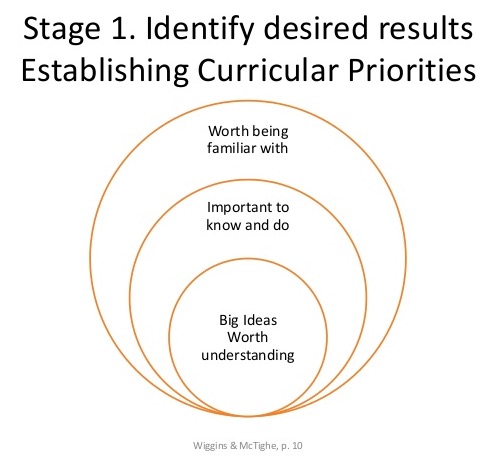
I. Identify the desired outcomes
A backward pre-stressing algorithm for efficient finite element implementation of in vivo material and geometrical ... - ScienceDirect.com
A backward pre-stressing algorithm for efficient finite element implementation of in vivo material and geometrical ....
Posted: Thu, 19 Nov 2020 20:04:00 GMT [source]
She could begin a class by sharing a summary of cases she finds fascinating and then spend time discussing the cases with students. However, this might not be the preferred use of instructional time when the goal is helping students understand how to produce a case brief and why being able to do so matters. Six Common Planning Pitfalls – Recomendations for Novice Educators – This article looks at common mistakes made by novice teachers when planning lessons, including planning with no clear objective.
In Practice
To help solve this problem, curriculum developers attempt to match the contents of the local or state curriculum, which are based on the standards, to the test or tests using backward design. Districts often begin with the test items that were released as a starting point in the process. Check out this backward design lesson plan template from Vanderbilt University. In that case, make sure that you give your students plenty of time to write notes for your lessons so they can study them and answer you promptly and accurately come test day. Since you already know what your tests will be about, this should be relatively easy.
This framework emphasizes the use of research-based practices, including circular planning, transfer of knowledge, backward design, teachers as facilitators, alignment, and evidence-based decision making. Backward design is a process for curriculum planning that emphasizes the alignment of standards, assessments, and lessons through a 3-stage process. This fully online program is for anyone developing and/or teaching an online course.ADDIE Instructional Design Certificate Program (Fully Online). This fully online program is designed for individuals interested in learning more about the ADDIE model.Instructional Design Models Certificate (Fully Online). You will explore traditional instructional design models and the progression of the learning design approach to creating online learning experiences.
2024 Mercedes-AMG GT coupe revealed - carsales.com.au - carsales.com.au
2024 Mercedes-AMG GT coupe revealed - carsales.com.au.
Posted: Sat, 19 Aug 2023 07:00:00 GMT [source]
Integration into Curriculum Planning
And while some disciplinary traditions exist for good reason, others may have developed by chance or worked better for previous generations than today’s learners. Finally, recycling the assignments from a former course may not always be the best fit for a new course. In other words, a superior education will teach students to think and practice like scientists. If we don’t plan learning experiences that make that possible, we’re giving them a sub-par education.
In other words, backward design helps educators create logical teaching progressions that move students toward achieving specific—and important—learning objectives. Backward design, also called backward planning or backward mapping, is a process that educators use to design learning experiences and instructional techniques to achieve specific learning goals. Backward design begins with the objectives of a unit or course—what students are expected to learn and be able to do—and then proceeds “backward” to create lessons that achieve those desired goals. In most public schools, the educational goals of a course or unit will be a given state’s learning standards—i.e., concise, written descriptions of what students are expected to know and be able to do at a specific stage of their education.
Furthermore, the answers to question #3 regarding enduring understandings can be adapted to form concrete, specific learning goals for the students; thus, identifying the desired results that instructors want their students to achieve. Backward design in education is a lesson planning strategy that starts with the final assessment, then asks teachers to build their lessons toward that goal. This differs from transitional lesson design, in which teachers identify content they need to cover, build relevant lessons, then create the final assessment. Backward lesson design encourages teachers to be more intentional about their lesson plans and ensures that they make the best use of class time.
Stage 3: Plan learning activities and instructional materials
Student learning and understanding can be gauged more accurately through a backward design approach since it leverages what students will need to know and understand during the design process to progress. When done well, backward design lesson plans often result in better test or assessment outcomes, which can be advantageous both for professional educators and for online teachers of all other types, like small business owners. The teacher first considers the knowledge and skills that students will need in order to complete the authentic assessment. Specifically, students will need to know about different food groups, human nutritional needs (carbohydrates, proteins, sugars, vitamins, minerals etc.), and about what foods provide these needs.
By following these practical tips, educators can take meaningful steps towards successfully implementing Backward Design. The transition may come with its challenges, but the potential benefits for both teachers and students are substantial. This focus could overshadow other crucial aspects of education, such as fostering a love for learning, encouraging creativity, and developing social skills. The concern here is the potential for "teaching to the test" at the expense of a more holistic education. Plus, because Backward Design focuses on real-world skills and applications, students can easily see the value in what they're learning. No more asking, "When will I ever use this?" They know they're learning things that will help them in the future, whether it's acing a job interview or understanding how to budget their money.
However, it is up to the skilled teacher to emphasize the process of gaining new knowledge, as opposed to acing the final test. While it can be difficult to grasp at first, backward design encourages educators to be intentional with their lesson planning, since it imbues the class time with a specific purpose. In backward design, educators start by identifying or creating a final assessment, then building their lessons toward that specific end. Traditionally, educators identify course content they need to cover, design their lessons accordingly, then create the final assessment. While the traditional approach may work in some cases, there are some significant flaws and challenges. The backward design model seeks to avoid those challenges by encouraging teachers to be much more intentional in their curriculum development and make the most out of class time.
The process of planning assignments and lessons by instructors to achieve pre-set instructional goals is called backwards mapping. Research shows that retrieving and using information is a critical piece of achieving learning (Karpicke & Roediger, 2008). As such, students must have multiple opportunities to practice and apply the specific knowledge and skills they need to perform well on assignments and be successful in your course. Reflect on your assessments of student learning from Step 3 to determine the teaching methods and learning activities that will best support students to succeed.
Since you need to track student progress with respect to all course goals and learning outcomes, each outcome should be tested by at least one assessment of student learning. It should be possible to think of several ways to assess a given learning outcome—if you can only think of one way to assess an outcome, then it is probably an assignment. To thoroughly describe what meeting your goals looks like in practice, you will likely develop at least three to four learning outcomes for each goal.
So far you have defined your course learning goals and outcomes and planned your assessments of student learning. In Step 4, you will choose the course content that will support students to succeed on those assessments. When you create your course learning goals, you describe how you want students to change internally as a result of taking your course. Learning goals broadly state what students should know or care about by the end of a course or curriculum. Set aside specific content—remember, that comes toward the end of the backward design process—and think about the big-picture, lasting impact you want your course to have on students.


No comments:
Post a Comment